Table of Contents
Restaurant Djiguite

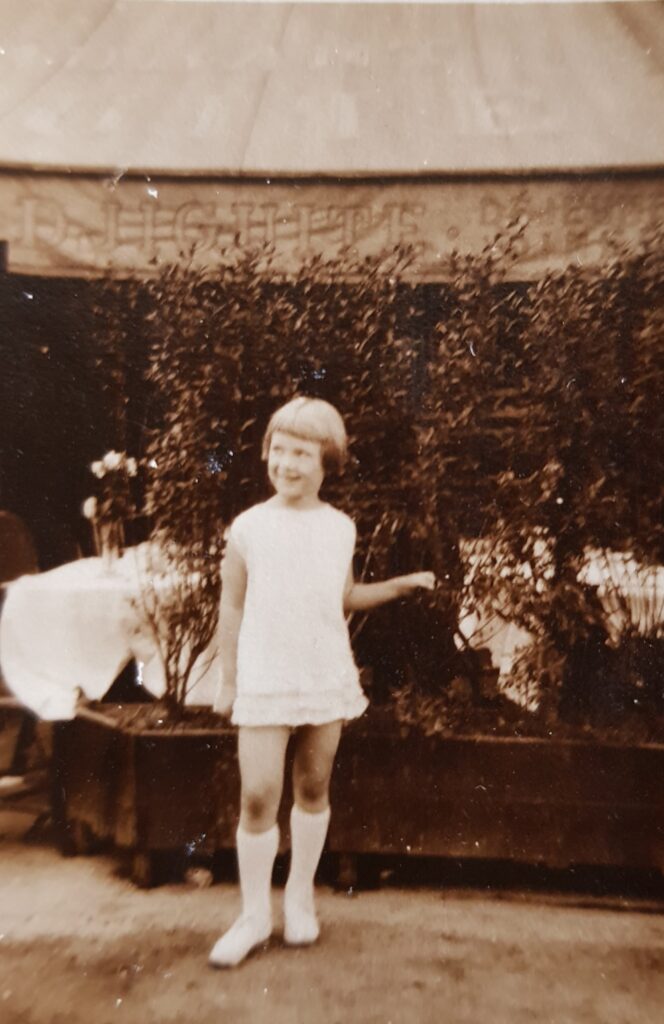

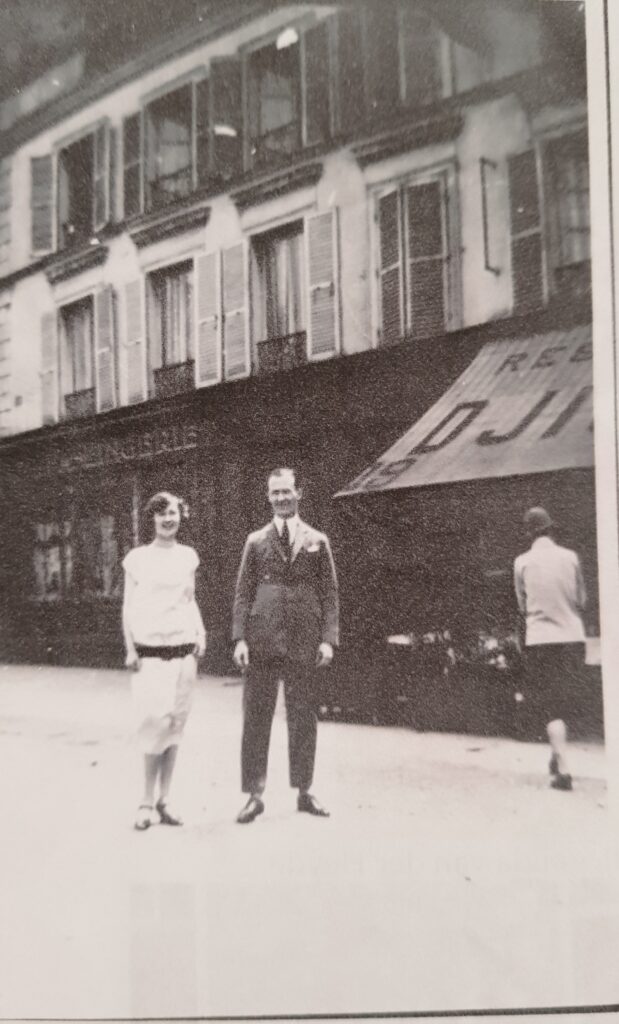
DJIGUITE IN THE MEDIA:
In an article about Russian Gipsy mucisians
Le_monde_des_musiciens_tsiganes_russesDownload
In the Dutch Telegraaf Newspaper

Translation:
From America to Russia .. it is as if one lands from a certain modern barbarism into an atmosphere of the innate culture of life. Fully accomplished in the arts, the Slavic know how to caress our palate wonderfully. In an old irregular corner of the boulevard, sad and touchant like an utrillo, hangs the Djiguite signboard, where the sober and tasty menu, which costs only six francs (60 cents), is overwhelmed by the divine music, which some silky-blouses clad Don Cossacks squeeze out of their balalaikas.
Telegraaf, July 19th, 1929
In Pariser Tageszeitung

Madame Zinaida Schakovskoy, 1940
Madame Zinaida Schakovskoy, ‘La folle Clio‘ from her stay in Paris during the occupation in 1940
Le soir même, ma mère, Mary Meerson et moi, bravant la
défense de circuler la nuit, nous allons « faire le noce » dans une
boîte russe, « Le Djiguite », boulevard Edgard Quinet. Trio insolite dans une boîte de nuit où il n’y a, vu l’heure tardive, que des
Allemands. On y mange le chachlik du marché noir. L’atmosphère
de la salle est lugubre. Essayant de briser cette mélancolie, l’une
ou l’autre des fausses tziganes essaie une chanson gaie, mais les
clients victorieux ne les aiment pas, ils préfèrent celles qui fen dent
l’âme. Leur vin est triste, ils semblent plonger avec délice au fond
du désespoir.
Translation: That same evening, my mother, Mary Meerson and I, braving the fact that it is forbidden to travel at night, go to “faire le noce” in a Russian place, “Le Djiguite”, boulevard Edgard Quinet. As an unusual trio in a nightclub where there are, considering the late hour, only Germans. We eat black market shashlik there. The atmosphere of the room is dismal. Trying to break this melancholy one or another of the fake gypsies try a cheerful song, but the victorious customers do not like them, they prefer those that split blade. Their wine is sad, they seem to dive with delight to the bottom despair.
Simon Carmiggelt
Every time I am in Paris, I go – against my better judgment – to the boulevard Edgar Quinet to see if ‘Djiguite’ is there again. Twenty years ago it was a small Russian cafe the size of a living room, where all kinds of crumpled figures from Gogolj and Tolstoy, blown out of their country by the revolution, had vodka brought by a Dostoevsky waiter who looked as if he preferred to hit you with a knoot. [Ivan?] Since the dullest poverty ruled the whole troop and a franc still meant something, a Dutch young man with a tenner in his pocket was a monarch with whom all grand dukes made common cause. The cafe was run by Mr. Kamendrovsky, a gloomy dude with narrow temples, who kissed the ladies’ hand and also tried to keep something very nice upright between the faded cloths, with which he had covered his twilight tent like a brooding pouch. In the corner by the piano, Russian gypsies, luscious ladies with a lot of fire and dark voices, sang, urging the repetitive consumption of cheap vodka, a thistle that ignites an unusually high degree of otherworldly bliss in the drinker. All of Mr. Kamendrovsky’s relatives had functions in the business. His mother ran the kitchen, his uncle reverently put away the coats [?], and a stubborn brother, who sulked at the situation in which history had thrown him, had to be shouted three times with a raised voice before – with a tray of cigarettes in front of his belly – he left the dark cubicle in which he seemed to have taken root forever. Outside, on the sidewalk, was another very shabby cousin, who did not actually belong there, but turned it into a self-created profession, drawing passers-by to the façade of the café with an expressive gesture, illuminating his pale face with a smile, which expressed how joyful it was in there. Anyone who had begun to convince himself, when he finally stumbled outside again, always found a taxi outside the door, behind the wheel of which another uncle [?] was seated, a well-meaning old man, in charge of running the water supply in a Russian town that no one can find on the map [?]. When I returned to Paris shortly after the war, the Djiguite was nailed shut like a crate.
Simon Carmiggelt, Articles de Paris & Vliegen vangen
Restaurant Djiguite in Newspaper in 1932
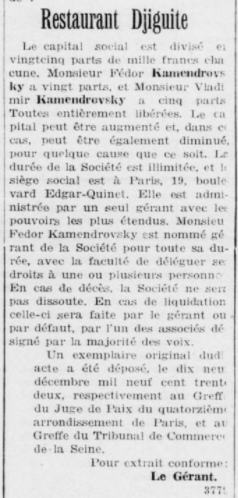
Translation (interesting, Feodor was in prison in 1932):
Djiguite Restaurant
“The share capital is divided into twenty-five shares of one thousand francs each, Mr. Fedor Kamendrovsky has twenty shares, and Mr. Vladimir Kamendrovsky has five shares. All fully paid. The capital can be increased and, in this case, can also be decreased, for whatever reason. The duration of the Company is unlimited, and the registered office is in Paris, 19, boulevard Edgar-Quinet. It is administered by a single manager with the most extensive powers. Mr. Fedor Kamendrovsky is appointed manager of the Company for its entire duration, with the ability to delegate his rights to one or more persons. In the event of death, the Company will not be dissolved. In the event of liquidation, this will be done by the manager or by default, by one of the signing partners by the majority of votes. An original copy of the said act was deposited on December nineteen thirty-two, respectively at the Registry of the Justice of the Peace of the fourteenth arrondissement of Paris and at the Registry of the Commercial Court of the Seine. For extract conform, The Manager.“
Djiguite is also mentioned in
- Dimitri Galitzine, Aliocha: Des Dimitrievitch aux tziganes Dimitrievitchyosha, note 15.
- Dimitri Galitzine, Le monde des musiciens tsiganes russes à Paris. Transformation des cadres artistiques et réseaux familiaux dans l’entre-deux-guerres, note 60