Table of Contents
Jean Guyon-Cesbron
(1902 – ?)

Jean Guyon-Cesbron was born in Marines (Seine-et-Oise) in 1902, studied at the colleges of Grand-Champ, in Versailles; Sainte-Croix, in Neuilly; and Mongazon, in Angers. At fifteen, he suffered from polio, which permanently deprived him of the use of his legs. In 1926, he began to write his first novels, and then he moved to Paris with a disabled bike, which allowed him to move around as he pleased. In Montparnasse, where he fell in love with Lydia Kamendrovsky, he contributed as a critic or reporter to numerous newspapers, weeklies and magazines. Date of death unknown.
Boris Vitalievich Dombrovsky
(1873 Irkutsk, Russia – 10 November 1931, Paris – 57/58 years old)
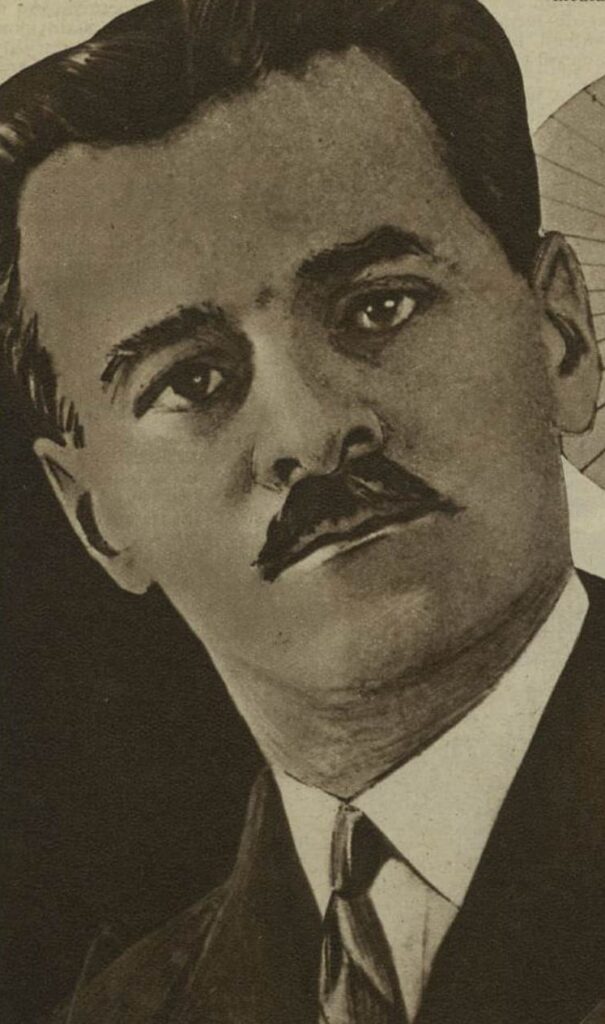
Dombrovsky’s grandfather was a native of Jurburg, Kovno province. Yakov-Saul Dombrover (later Yakov Savelyevich Dombrovsky, 1794-1884) was exiled to Oyok in 1833 as a participant in the Polish uprising; in 1859, he moved to Irkutsk, where he engaged in distillery production and grain trade, acquired gold mines in the Trans-Baikal region, built the Yakovlevsky distillery and mill factories of Ya.S. Dombrovsky in Zakhalsky (1865), became a merchant of the first guild (1869) and one of the founders of the local Jewish community, which he led for two decades.
In 1904, Boris was drafted into the army. After serving in the army, he left Irkutsk to study in Moscow, and then lived in Moscow. In the civil war, from 1 February 1919, he was a lieutenant of the Volunteer Army. He was evacuated on 25 March 1920 from Novorossisk on the ship “Burgermeister Schroeder”.
In exile, he lived in France and played on the stock exchange. He was one of the publishers of the Parisian magazine “Peace and Creativity”. He had several affairs with married women and lived off the finances of a rich Russian woman.
The man who liquidated Dombrovsky’s affairs after his death stated that Dombrovsky had left an asset of 60,000 francs and a liability of 1 million. He had found forged letters amongst his papers written to blackmail people into giving him their last diamonds, and it was his deep conviction that Dombrovsky was a swindler.
Click here for more information.
Colonel Andrey Shkuro, the Kuban Cossack
(7 January 1887 – 17 January 1947)

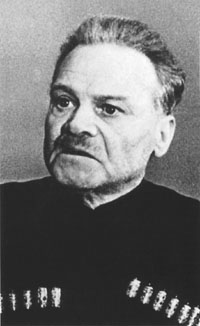
Andrey Grigoriyevich Shkuro was a Lieutenant General (1919) of the White Army who served in the Kuban Cossack Host. In World War I, Shkuro became the commander of a special guerrilla unit which executed several daring raids behind Austrian-Hungarian and German lines. During World War I, Shkuro was promoted to the rank of colonel.
In the spring of 1918, Shkuro organised an anti-Bolshevik Cossack unit in the Caucasus, raiding Stavropol, Yessentuki and Kislovodsk. After officially joining Denikin’s White Army, he became the commander of the Kuban Cossacks brigade, which soon increased in size and became a division. In May 1919, Shkuro, as a young lieutenant-general, had a whole cavalry corps of Cossacks under his command.
Shkuro, though charismatic and audacious, showed bravery which often bordered on the reckless; he received several wounds, and also acquired a reputation for his cunning. Many in the White Army’s high command, however, considered him undisciplined and somewhat of a “loose cannon”.
Although the White Army general Pyotr Wrangel valued initiative, he also demanded discipline from his subordinates. Wrangel ended up disliking Shkuro, and upon reorganising the army, Wrangel did not give him a command position. This prompted Shkuro’s resignation.
After the defeat of the Whites, Shkuro lived as an exile, primarily in France and Serbia. For the first few years, he and a few other Cossack partners, displaying their great horsemanship, performed in circuses as trick riders across Europe. In addition, he continued to conduct anti-Soviet activities. Russian émigré memoirs depict him as a very lively man who enjoyed social gatherings with plenty of dancing, singing, drinking, and vivid storytelling about times past.
In 1941, Shkuro agreed to be one of the organisers of anti-Soviet Cossack units consisting of White émigrés and Soviet (mostly Cossack) prisoners of war in alliance with Nazi Germany. He, along with many other exiles, hoped that this would lead to the eventual destruction of the Soviet Union and “liberation” of Russia from communism. In 1944, Shkuro was placed in command of the “Cossack Reserve”, which was primarily deployed in Yugoslavia. In 1945, Shkuro was detained by the British forces in Austria and handed over to the Soviet authorities. In Russia, Andrey Shkuro was sentenced to death and on 17 January 1947, he was executed by hanging.
Roman the Cossack
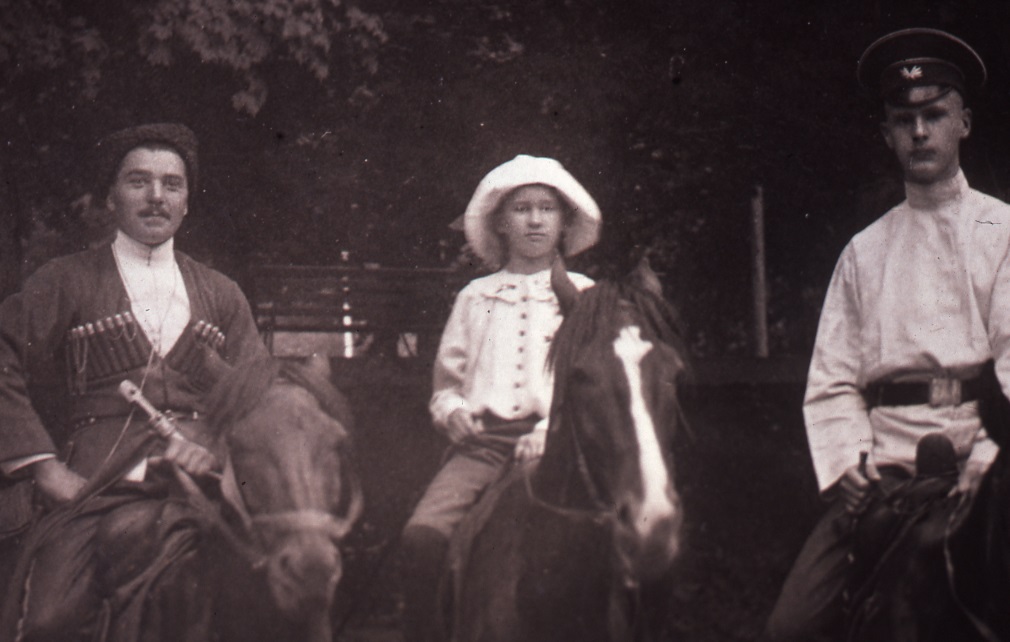
Son of the stablemaster in Nizhny Lomov, followed Alexandra to Kislovodsk, presumed dead but now working in a circus.
Basile (Vasily) Alekseyevich Maklakoff
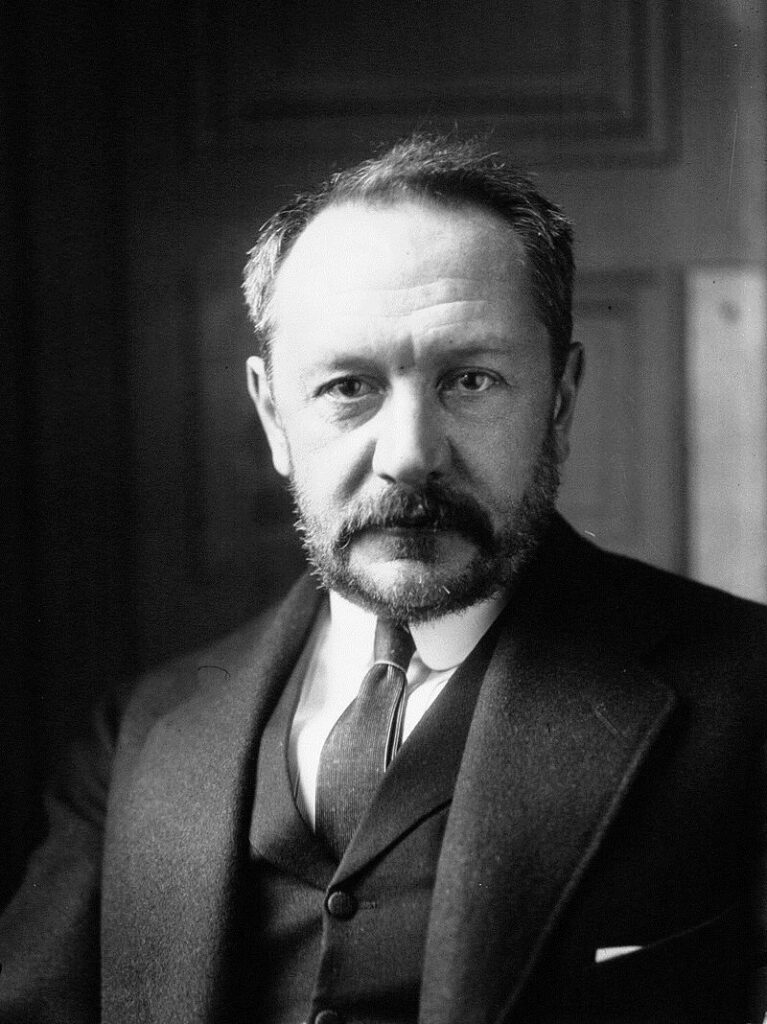
Vasily Alekseyevich Maklakoff (22 May [O.S. 10 May] 1869, Moscow – 15 July 1957, Baden) was a Russian trial lawyer and liberal parliamentary orator, one of the leaders of the Constitutional Democratic Party and Russian Freemasonry, notable for his advocacy of a constitutional Russian state.
In October 1917, Maklakoff was appointed to replace Alexander Izvolsky as Ambassador to France. But when he arrived in Paris, he learned of the Bolshevik takeover!
Nevertheless, he continued to occupy the splendid mansion of the Russian embassy for seven years, until France thought it necessary to recognise the Bolshevik government.
Throughout this period, French authorities considered Maklakoff “an ambassador who had not yet been accredited”. There was considerable ambiguity in this position. For example, he once received a letter from Premier Clemenceau addressed to “Son Excellence Monsieur Maklakoff, Ambassade de Russie”, with the lightly erased letters “ur” at the end of “Ambassade”. Maklakoff lightly compared himself to “a magazine that one puts on a seat to show that it is occupied”.
In September 1920, Maklakoff visited the Crimea to meet Pyotr Wrangel and other White Russian leaders. This was his last visit to Russia.
Later, he assumed control of a network of offices Russes that certified marriages and births of Russian émigrés throughout France and performed other work normally undertaken by Russian consulates.
Despite encroaching deafness, Maklakoff remained at the helm of the Russian Emigration Office (eventually subsumed into the structure of Charles de Gaulle’s government) until his death at the age of 88. His front-rank reputation and talent for mediation allowed Maklakoff (rather than better-known but controversial men like Kerensky and Miliukov) to manoeuvre between the many warring factions that made up the Russian émigré community and to represent their interests in dealing with the French government. He also wrote several books on the history of social thought and the Russian liberal movement.
Click here for more information.
Archbishop Eulogius
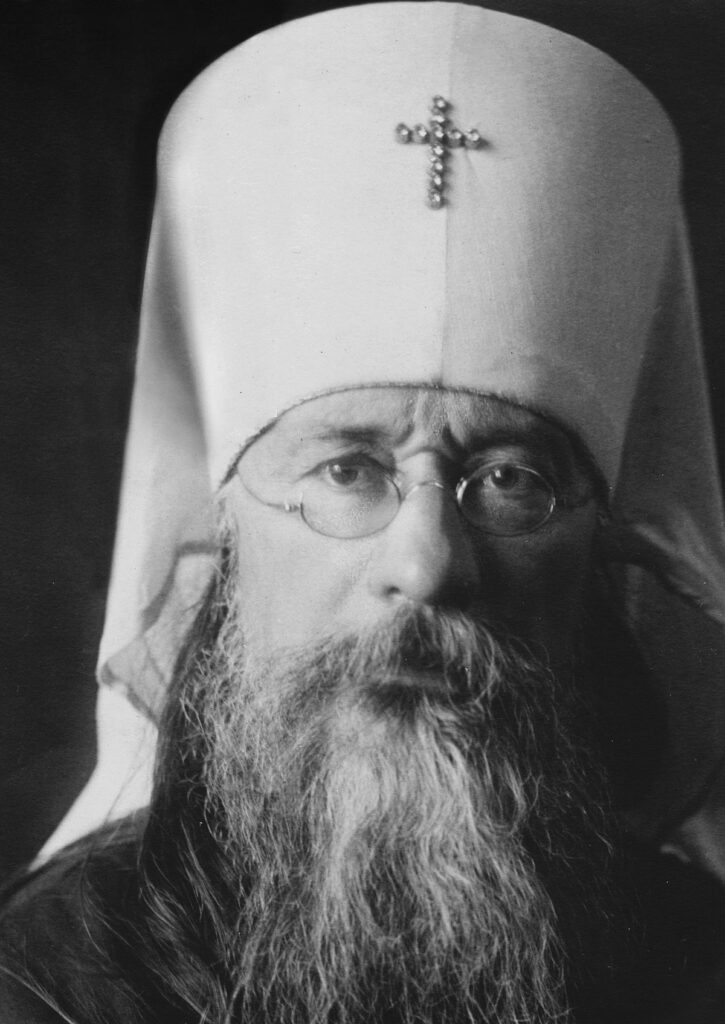
Archbishop Eulogius of Paris (born Vasily Semyonovich Georgiyevsky; 10 April 1868 – 8 April 1946, in Paris) was an Orthodox Christian bishop who led elements of the Russian Orthodox diaspora in Western Europe from 1921 until his death.
Initially, he lived in Berlin, in the building of the Alexander Orphanage, visiting Paris and camps for Russian refugees. At the end of 1922, he transferred his administration to Paris and from 1931, he was head of the Patriarchal Exarchate for Orthodox Parishes of Russian Tradition in Western Europe. He was at various times archbishop and metropolitan bishop of the Moscow Patriarchate, the Russian Orthodox Church Outside Russia and the Ecumenical Patriarchate.
Bishop Eulogius’ memoirs (in Russian)
Maurice Garçon
(25 November 1889 – 29 December 1967)

A French novelist, historian, essayist and lawyer. A major figure at the bar, he gained a certain notoriety and was even mentioned with René Floriot in the last phrase of Jean-Pierre Melville’s film “Bob le flambeur”.
He is best known for having defended a large number of causes, both literary and criminal, including those of René Hardy, Georges Arnaud and Jean-Jacques Pauvert.
Click here for more information about Maurice Garcon.
Evgeny Miller
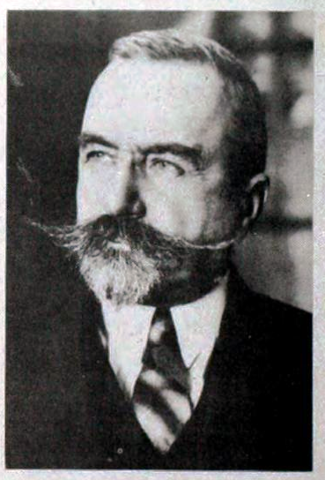
Evgeny Karlovich Miller (25 September 1867, Dvinsk, Latvia – 11 May 1939, Moscow), Lieutenant-General in 1915, was the leader of the White Armies in northern Russia in 1919-1920, during the Russian Civil War.
After the war, he went into exile in Paris. From 1930, he was the leader of the opponents of communism in the circles of white emigration and the ROVS. On 22 September 1937, he was kidnapped by NKVD agents and taken to Moscow, where he was assassinated on 11 May 1939.
Click here for more information.
Madame K.
(19 August 1872 – 6 December 1971)

Mathilda Kschessinska (Also known as Princess Romanovskaya-Krasinskaya after her marriage) was a Polish ballerina from a Polish noble family, Krzesinsky.
In 1902, Mathilda had given birth to a son, Vladimir (known as “Vova”; 30 June 1902 – 23 April 1974); he was later titled H.S.H. Prince Romanovsky-Krasinsky, but it is said that he never knew for sure who his father was.
She was in Kislovodsk from July 1917 until the end of September 1918.
After the Revolution, Kschessinska moved first to the French Riviera and then to Paris. Here in 1921, she finally married her Grand Duke Andrey, one of the two possible fathers of her son Vova. In 1929, she opened her own ballet school and performed for the last time (at the age of 64 )at Covent Garden.
In later years, she suffered financial difficulties but remained indomitable. She died in Paris, eight months short of her 100th birthday and is buried at the same Russian Cemetery as the Kamendrovskys (and in fact close to their graves), at the Sainte-Genevieve-des-Bois.
Vova
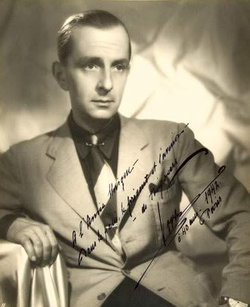
Prince Romanovsky-Krasinsky, son of Madame K. (Mathilda Kschessinska). In Kislovodsk, he was in the same class as Dmitry.
Rosita Ivanoff
Flamboyant opera singer, twin-sister of Doctor Ivanoff, stayed with the Kamendrovskys in Kislovodsk. Escaped with Kamendrovskys to Sochi and escaped with Alexandra and Mother from Moscow to Warsaw.
Rebecca Weinstein
A Jewish friend of Madame K., who lost her scholarly husband and baby. Escaped with Kamendrovskys to Sochi and escaped with Alexandra and Mother from Moscow to Danzig. What happened to her during the War is unknown.
Cousin Maria
Aunt Paraskeva’s daughter. She went into hiding in Nizhny Lomov. Alexandra and Mother met her in Rostov and escaped with her to Danzig.
Click here for the family tree of Mikhail and Paraskeva Kamendrovsky.
Cousin Sergey
Cousin Maria’s husband, who almost got caught by the Reds in Rostov and when escaping Russia. Moved to Danzig.
Marina
Cousin Maria and Sergey’s daughter, born in Rostov in 1920.
Monsieur Leonidoff
Feodor’s boss, the owner of the restaurant Oasis and Martyanich.
The only information I was able to find about him was his name and these two restaurants. They were mentioned in many newspapers, see sources.
George Ivanovich Gurdjieff
(14 January 1872– 29 October 1949)
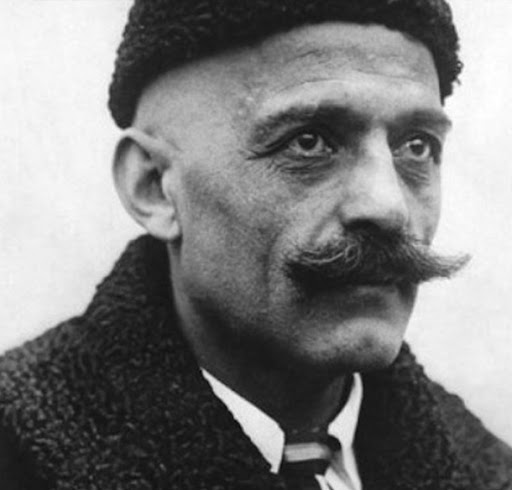
A mystic, philosopher, spiritual teacher, and composer of Armenian and Greek descent. Gurdjieff taught that most humans live their lives in a state of hypnotic ‘waking sleep’, but that it is possible to awaken to a higher state of consciousness and achieve full human potential.
During the Revolution, he set up a temporary study community in Yessentuki from spring 1917 until early August 1918. He then moved on to Maykop, Sochi and Poti, before moving to Tbilisi. In late May 1920, political conditions in Georgia had changed, and the old order was crumbling. Just like the Kamendrovskys, he travelled to Batumi on the Black Sea coast and travelled by ship to Istanbul, where they stayed for some time. In 1936, he settled in Paris, where he was to stay for the rest of his life.
Pavel Nikolayevich Shatiloff
(13 November 1881 – 5 May 1962)
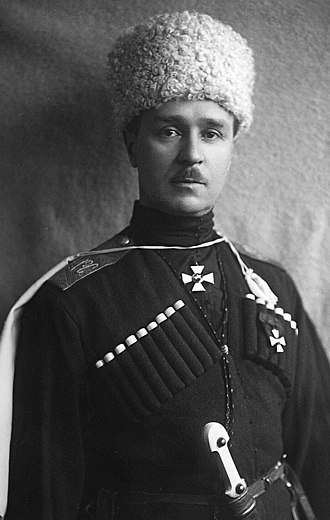
Born in Tbilisi, Colonel of the General Staff, the hero of the First World War, member of the White movement, general from the cavalry (1920). He came from a noble family; his grandfather and father were generals.
At the end of 1918, he joined the Volunteer Army. Since 10 January 1919, the head of the 1st cavalry division in the equestrian corps of General Wrangel. In February 1919, he was out of order in Kislovodsk due to injury and travelled with the Kamendrovskys to Tbilisi, where his father was dying.
In the spring of 1919, General Shatiloff was back in battle and became a lieutenant general. In the fall of 1920, Shatiloff led the successful evacuation of the Russian Army from the Crimea with Wrangel.
Until 1922, he officially held the post of chief of staff of the Russian Army, while in France. He is buried at the same cemetery as the Kamendrovskys.
Countess Eugenia
Elena’s friend at La Maison de Couture, who also loves the good life.
Maria Komorska-Petipa
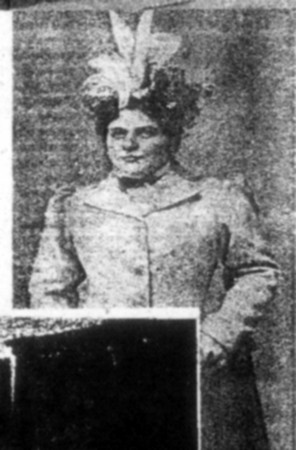
Maria Komorska – one of the witnesses in Dombrovsky’s murder trial – was the long-time mistress of Boris Dombrovsky. But she was not just that; she was quite an interesting woman.
There is no exact information about her family. In documents, she is called ‘the daughter of Marius Mariusovich Petipa’, but almost nothing is known about her mother, nor her childhood, and it is thought that she was born out of wedlock. Her grandfather was the famous ballet dancer Marius Ivanovich Petipa. Before becoming Mrs Komorska, she was known as the actress Maria Nikolaevna Ninina-Petipa, and she was quite famous in the Far East.
The earliest information about Maria is found in descriptions of the troupe of the actress and singer Stanislavskaya. It was in her troupe that Maria made her acting debut in 1897, and soon she enjoyed popularity throughout the Far East. She performed mainly in the role of dramatic heroines, but she also turned out to be a good organiser. She opened theatres and gave concerts in Khabarovsk, Blagoveshchensk, Vladivostok and other cities of the region. In 1903, Maria contributed to the opening of the first public theatre in Vladivostok, which was housed in the Ignat Boroviks circus. The prices were lower than in other theatres, and the performances were more advanced, in line with the metropolitan trends.
The winter seasons in Khabarovsk in 1913-1915 turned out to be especially financially successful, and Maria put the income into building a new theatre, the New Summer Theatre, in Khabarovsk. Here, her troupe performed until September 1915. After that, her troupe performed in several cities of the Far East, including Harbin, until she moved her interest to Moscow.
From 1914 to 1917, Maria owned a small theatre in Moscow and persuaded the new Russian theatre star Alexander Vertinsky to give solo performances there. It was through her that Vertinsky became a celebrity. Tickets were sold out a week in advance, and Russian recognition was followed by foreign recognition when Maria, as his impresario, organised Vertinsky’s solo tours abroad.
But everything changed in 1917. With the Russian Revolution, it became more and more difficult to live in Moscow, and Maria decided to close the theatre.
What happened after that is unclear. In the trial, she said: “I lived with Dombrovsky for eighteen years and he didn’t do anything. You see, he lived on my money. I’ve always had a large enterprise. He robbed me. When we were escaping from Russia, he tore up all my documents in Constantinople and passed me off as his lawful wife, but I did not want to be his lawful wife!”
So Dombrovsky must have already been her lover at this time, and they seem to have escaped together. He was evacuated on March 25, 1920, from Novorossisk on the ship “Burgermeister Schroeder”. After Constantinople, they seem to have lived together in Paris until, according to Maria, she eventually kicked him out and moved to Harbin, where she was living in 1933. What happened to her after that remains unknown.
Click here for more information about her life in Russia
Click here for more information about the trial